Attachment Styles in Close Relationships – ECR (Online 36 items)
The above is a sample of the complete report version.
Purchase information:
1. This assessment is conducted entirely online.
2. Your order will be confirmed automatically upon payment, and you will immediately receive an email containing the link to the online assessment.
3. After accessing the link and answering all the questions, re-enter it to view the full report.
4. For logged-in users: Your order details will include the online assessment link. You will also receive an order confirmation email containing the assessment link to the registered email address you provided.
5. For non-logged-in users: Please ensure you record the link to the online assessment provided in the order details.
Attachment Styles in Close Relationships: Understanding Patterns of Emotional Bonding
Attachment styles—the ways individuals form and maintain emotional bonds—play a pivotal role in shaping the dynamics of close relationships, from friendships to romantic partnerships. Rooted in attachment theory, developed by psychologist John Bowlby and expanded by Mary Ainsworth, these styles emerge from early childhood experiences with caregivers and influence how individuals perceive trust, intimacy, and emotional safety throughout their lives. This article explores the four primary attachment styles, their characteristics, and their implications for relationships, offering insights into fostering healthier connections.
1. The Four Attachment Styles
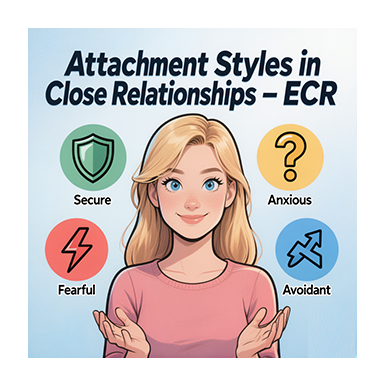
Attachment styles are broadly categorized into four types, each reflecting distinct patterns of emotional responsiveness and relational behavior:
a. Secure Attachment
- Characteristics: Individuals with secure attachment feel confident in their ability to form close bonds. They trust others, communicate openly, and balance independence with emotional intimacy. Securely attached people typically had caregivers who were consistently responsive and nurturing.
- Impact on Relationships:
- Strengths: They navigate conflicts constructively, provide emotional support, and maintain stability in partnerships.
- Example: A securely attached partner might openly discuss their needs while respecting their partner’s boundaries, fostering mutual trust.
b. Anxious-Preoccupied Attachment
- Characteristics: Marked by a fear of abandonment, individuals with this style often seek excessive reassurance and validation. They may exhibit clinginess, hypersensitivity to perceived neglect, or over-reliance on partners for emotional stability.
- Impact on Relationships:
- Challenges: Partners may feel pressured to meet unrealistic emotional demands, leading to tension or resentment.
- Example: An anxiously attached person might repeatedly check their partner’s messages or worry excessively about infidelity, even without evidence.
c. Dismissive-Avoidant Attachment
- Characteristics: Rooted in early experiences of emotional unavailability, dismissive individuals prioritize independence and self-reliance. They often downplay emotional needs, avoid vulnerability, and distance themselves during conflicts.
- Impact on Relationships:
- Challenges: Emotional intimacy feels threatening, leading to superficial connections or abrupt withdrawal.
- Example: A dismissive partner might refuse to discuss feelings, insisting, “I don’t need anyone’s help,” which can leave partners feeling unheard.
d. Fearful-Avoidant (Disorganized) Attachment
- Characteristics: This style combines anxiety and avoidance, often stemming from trauma or inconsistent caregiving. Individuals crave closeness but fear rejection, leading to erratic behaviors like pushing partners away during vulnerability.
- Impact on Relationships:
- Challenges: Relationships may cycle between intense connection and sudden detachment, creating instability.
- Example: A fearful-avoidant partner might alternately shower affection and withdraw, leaving their partner confused and insecure.
2. How Attachment Styles Shape Relationship Dynamics
Attachment styles influence key relational processes:
- Communication: Secure individuals engage in open, empathetic dialogue, while anxious or fearful styles may involve criticism or avoidance.
- Conflict Resolution: Secure partners collaborate to solve problems, whereas avoidant styles may suppress conflicts, and anxious styles may escalate them.
- Emotional Intimacy: Secure and anxious styles seek closeness, but the latter risks suffocating partners. Dismissive and fearful styles resist emotional depth.
3. Recognizing and Transforming Attachment Patterns
While early experiences shape attachment styles, they are not immutable. Strategies for fostering healthier relational patterns include:
- Self-Awareness: Reflect on recurring relational themes (e.g., fear of rejection or avoidance of dependency) to identify your style.
- Therapy: Modalities like Cognitive Behavioral Therapy (CBT) or Emotionally Focused Therapy (EFT) can help reframe negative beliefs and improve emotional regulation.
- Communication Skills: Practice active listening, validate partners’ feelings, and express needs without blame.
- Gradual Vulnerability: For avoidant styles, start with small acts of trust (e.g., sharing a personal fear). For anxious styles, challenge catastrophizing thoughts.
4. Conclusion
Attachment styles provide a framework for understanding how early experiences shape adult relationships. By recognizing their patterns—whether secure, anxious, dismissive, or fearful—individuals can take proactive steps to cultivate healthier connections. While challenges exist, fostering self-awareness and employing targeted strategies can transform relational dynamics, leading to deeper intimacy and fulfillment.
Final Note: Relationships thrive not on perfect compatibility but on mutual effort to bridge attachment gaps. As psychologist John Bowlby emphasized, “Attachment is the lasting psychological connectedness between human beings”. Embracing this truth can pave the way for resilient and compassionate partnerships.