The Big Five Personality – NEO Five-Factor Inventory – Latest Norms (NEO-FFI) (Online 60 items)
The above is a sample of the complete report version.
Purchase information:
1. This assessment is conducted entirely online.
2. Your order will be confirmed automatically upon payment, and you will immediately receive an email containing the link to the online assessment.
3. After accessing the link and answering all the questions, re-enter it to view the full report.
4. For logged-in users: Your order details will include the online assessment link. You will also receive an order confirmation email containing the assessment link to the registered email address you provided.
5. For non-logged-in users: Please ensure you record the link to the online assessment provided in the order details.
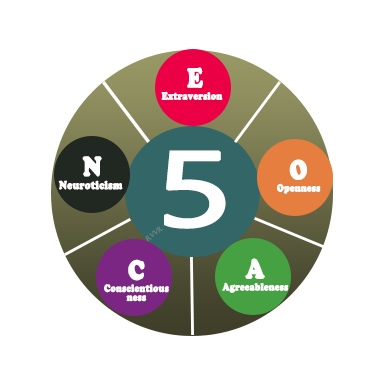
The Big Five Personality – NEO Five-Factor Inventory (NEO-FFI) is a concise, widely used personality assessment tool designed to measure the five core dimensions of the Five-Factor Model (FFM) of personality: Neuroticism (N), Extraversion (E), Openness to Experience (O), Agreeableness (A), and Conscientiousness (C). Developed by psychologists Paul T. Costa Jr. and Robert R. McCrae, the NEO-FFI is a shortened version of the more comprehensive NEO Personality Inventory-Revised (NEO-PI-R), retaining the most psychometrically robust items to provide a efficient yet accurate assessment of personality traits.
1. Development Background
The NEO-FFI was created in 1992 as a response to the need for a briefer alternative to the 240-item NEO-PI-R, which, while comprehensive, was time-consuming for both researchers and clinicians. Costa and McCrae selected 12 items from each of the five NEO-PI-R domains (60 items total) based on their high loadings on the corresponding FFM traits, ensuring that the NEO-FFI captured the essence of each dimension without sacrificing validity. This reduction maintained the tool’s ability to assess the five factors while significantly cutting administration time (from ~40 minutes for the NEO-PI-R to ~15–20 minutes for the NEO-FFI).
2. Structure and Content
The NEO-FFI consists of 60 self-report items (12 per domain) rated on a 5-point Likert scale (1 = “Strongly Disagree” to 5 = “Strongly Agree”). The items are designed to reflect everyday behaviors, thoughts, and feelings, making the tool accessible to a wide range of populations. The five domains and their core characteristics are:
- Neuroticism (N): Reflects emotional instability, including traits like anxiety, depression, and vulnerability to stress. High scorers tend to experience negative emotions more intensely and frequently.
- Extraversion (E): Captures sociability, assertiveness, and enthusiasm. High scorers are outgoing, talkative, and energized by social interactions.
- Openness to Experience (O): Measures curiosity, imagination, and appreciation for art and new ideas. High scorers are open-minded, creative, and willing to try new things.
- Agreeableness (A): Reflects compassion, cooperativeness, and trust. High scorers are empathetic, kind, and prioritize harmonious relationships.
- Conscientiousness (C): Assesses organization, responsibility, and self-discipline. High scorers are goal-oriented, reliable, and detail-oriented.
Each domain is scored independently, allowing for a nuanced profile of an individual’s personality strengths and weaknesses.
3. Key Features
The NEO-FFI is distinguished by several features that contribute to its popularity:
- Brevity: At 60 items, it is significantly shorter than the NEO-PI-R, making it suitable for settings where time is limited (e.g., clinical screenings, research studies with large samples).
- Psychometric Rigor: Despite its brevity, the NEO-FFI maintains strong internal consistency (Cronbach’s alpha coefficients ranging from 0.68 to 0.86 across domains) and test-retest reliability (correlations of 0.81–0.91 over time). It also demonstrates good convergent validity with other personality measures (e.g., the NEO-PI-R, Big Five Inventory) and discriminant validity (low correlations between unrelated domains).
- Accessibility: The items use simple, everyday language, avoiding jargon, which makes the tool easy to understand for individuals with varying levels of education or cultural backgrounds.
- Versatility: The NEO-FFI is used in a wide range of contexts, including clinical psychology (assessing personality disorders), organizational psychology (employee selection, team building), and research (studying personality-development links).
4. Applications
The NEO-FFI’s efficiency and validity have made it a go-to tool for:
- Clinical Assessment: Helping clinicians identify personality traits associated with mental health conditions (e.g., high neuroticism in anxiety disorders, low conscientiousness in substance abuse).
- Organizational Settings: Assisting employers in selecting candidates whose personality traits align with job requirements (e.g., high conscientiousness for roles requiring attention to detail, high extraversion for sales positions).
- Research: Enabling researchers to study the Big Five traits across diverse populations (e.g., cross-cultural comparisons, longitudinal studies on personality stability).
5. Limitations
While the NEO-FFI is a valuable tool, it is not without limitations:
- Lack of Facet Detail: Unlike the NEO-PI-R, which includes 30 facet scales (6 per domain), the NEO-FFI only measures the five broad domains. This means it may miss subtle variations in personality (e.g., distinguishing between “anxiety” and “depression” within neuroticism).
- Cultural Bias: Although translated into multiple languages, some studies have raised concerns about the tool’s factor structure in non-Western cultures.
- Self-Report Bias: Like all self-report measures, the NEO-FFI is susceptible to response biases (e.g., social desirability, where individuals may overreport “positive” traits like agreeableness).
6.Conclusion
The NEO Five-Factor Inventory (NEO-FFI) is a concise, reliable, and valid tool for assessing the Big Five personality traits. Its brevity and accessibility make it ideal for settings where time or resources are limited, while its psychometric rigor ensures that it provides meaningful insights into an individual’s personality. Despite its limitations (e.g., lack of facet detail, cultural bias), the NEO-FFI remains one of the most widely used personality assessments globally, valued for its ability to balance efficiency with accuracy.